In this guide
- 01Why liveries matter to sim racers
- 02Gulf — the most beloved scheme in motorsport
- 03Martini Racing — stripes that won Le Mans
- 04The Pink Pig — Porsche’s most irreverent car
- 05Salzburg red — the first overall Le Mans win
- 06Rothmans — Group C royalty
- 07The American liveries: Brumos, Coca-Cola, Apple
- 08New Man & Mobil 1 — the modern classics
- 09Running these liveries in your sim
Why liveries matter to sim racers
A great livery is more than paint. It’s shorthand for an era, a rivalry, a famous lap. Mention “Gulf” to anyone who has touched a steering wheel — real or virtual — and they see a powder-blue 917 streaking down the Mulsanne. That recognition is exactly why liveries are one of the first things a sim racer customizes when they sit down at a rig.
Modern sims ship with deep paint editors, and the community keeps decades of historic schemes alive through downloadable skin packs. A first-timer at your lounge might not know a Porsche 962 from a 911 RSR — but the moment they load the Pink Pig and their friends start laughing, you’ve created a memory. That’s the bridge between motorsport heritage and the experience you sell.
Porsche has more iconic liveries than almost any marque on earth, because it has been winning — and losing beautifully — for 75 years of factory motorsport. Here are the schemes worth knowing, the stories behind them, and how to put them in front of customers.
19
Overall wins at the 24 Hours of Le Mans — more than any other manufacturer
1970
Porsche’s first overall Le Mans victory, in Salzburg red and white
75 yrs
Of Porsche factory motorsport celebrated in 2026
Gulf — the most beloved scheme in motorsport
Powder blue and marigold orange. No livery in racing history is more instantly recognizable, and none is more frequently voted the greatest of all time.
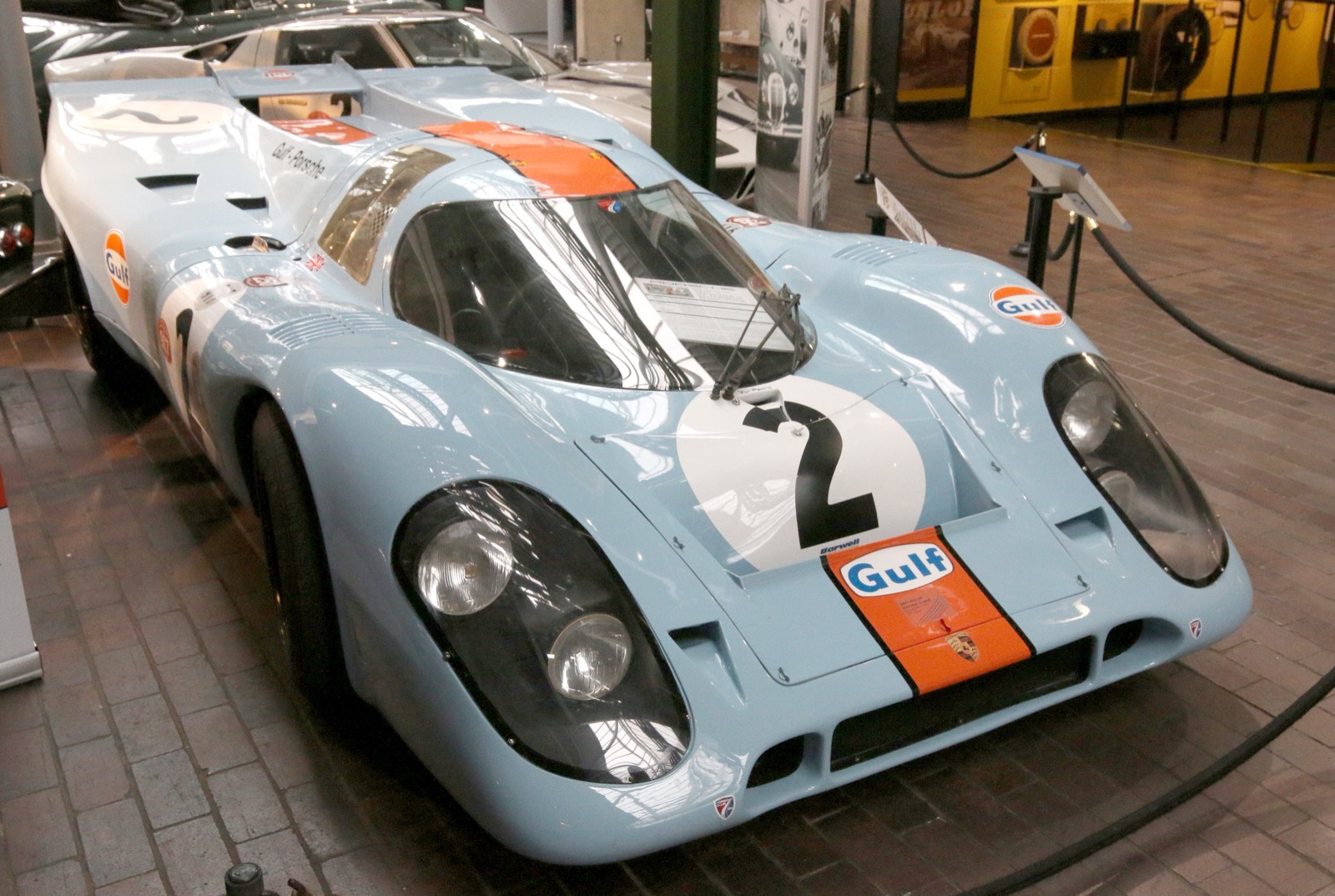
The Gulf Oil colours arrived on the John Wyer Automotive Engineering Porsche 917Ks at the dawn of the 1970s. The pairing of pale blue and a warm orange stripe shouldn’t work — and somehow it’s perfect, draped over the long-tail and short-tail 917 bodies that remain among the most beautiful race cars ever built.
Its cultural reach exploded thanks to Steve McQueen’s 1971 film Le Mans, where the Gulf 917 became the hero car for a generation that never saw one in person. Half a century later the scheme is still licensed onto everything from the 911 GT3 R to special-edition road cars — and it is consistently the single most-downloaded Porsche skin in sim racing.
It’s the livery you paint when you want the car to look fast standing still.
Martini Racing — stripes that won Le Mans
A white base with red, dark blue, and light blue racing stripes. Martini Racing is the livery that turned a drinks brand into a motorsport institution.
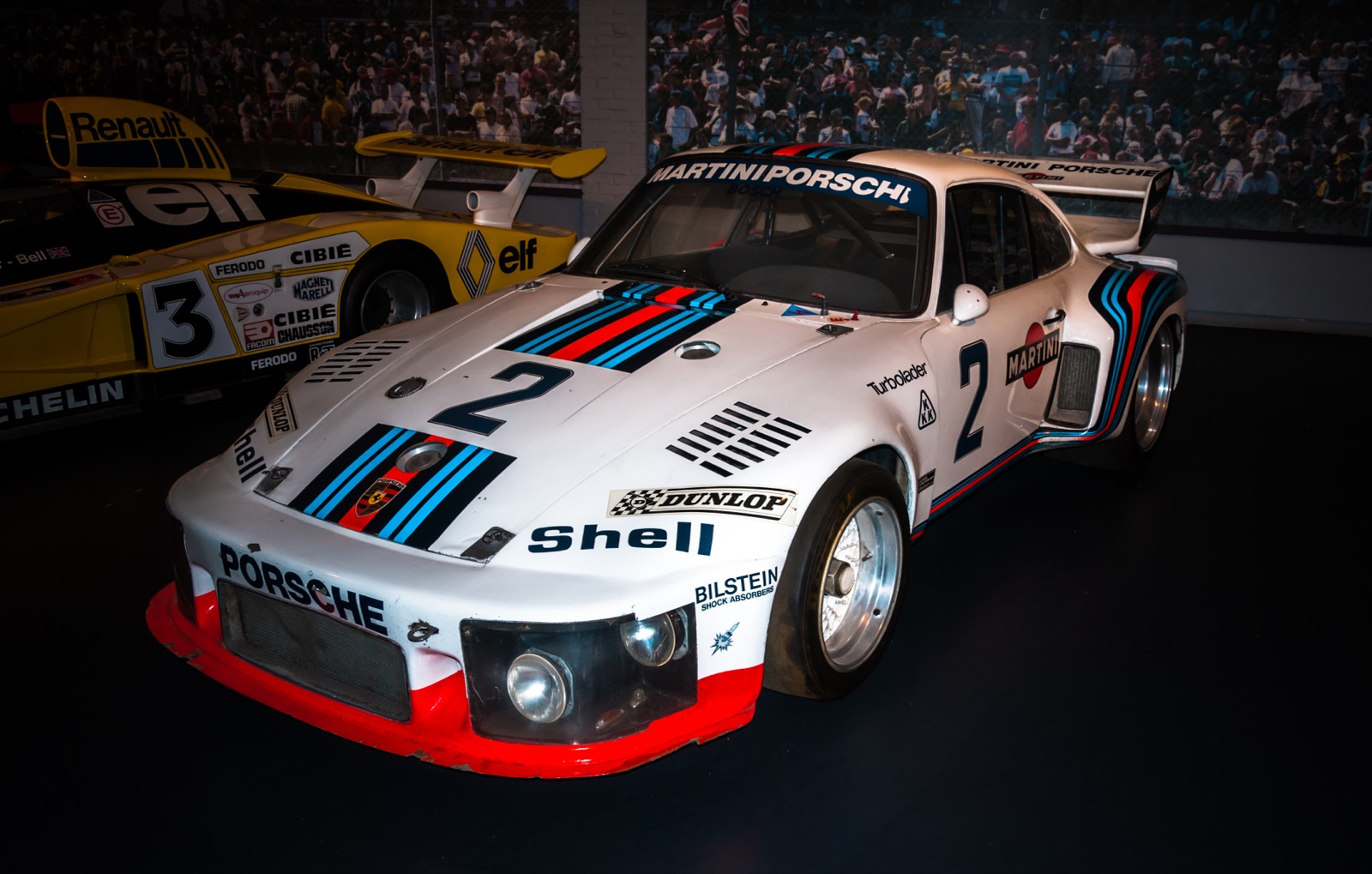
Martini’s partnership with Porsche produced some of the most successful — and best-looking — race cars of the 1970s and 80s. The stripes wrapped the 935 that dominated Group 5, the 936 that won Le Mans in 1976 and 1977, and later the all-conquering 956 of the early Group C era. The clean white canvas with its three-tone slashes photographs beautifully from any angle, which is part of why it has aged so well.
For lounge operators, Martini is the “elegant” choice — the scheme customers pick when they want to look serious and period-correct. It pairs especially well with the 935 and 936 mods available across most sims.
Did you know
Porsche revived the Martini stripes officially on the 919 Hybrid LMP1 cars and on special 911 editions, keeping a 50-year design language alive for a new audience that mostly discovered it through video games.
The Pink Pig — Porsche’s most irreverent car
Bubblegum pink, with a butcher’s cuts-of-meat diagram drawn over the bodywork. The Porsche 917/20 “Pink Pig” is the most charming joke in motorsport.
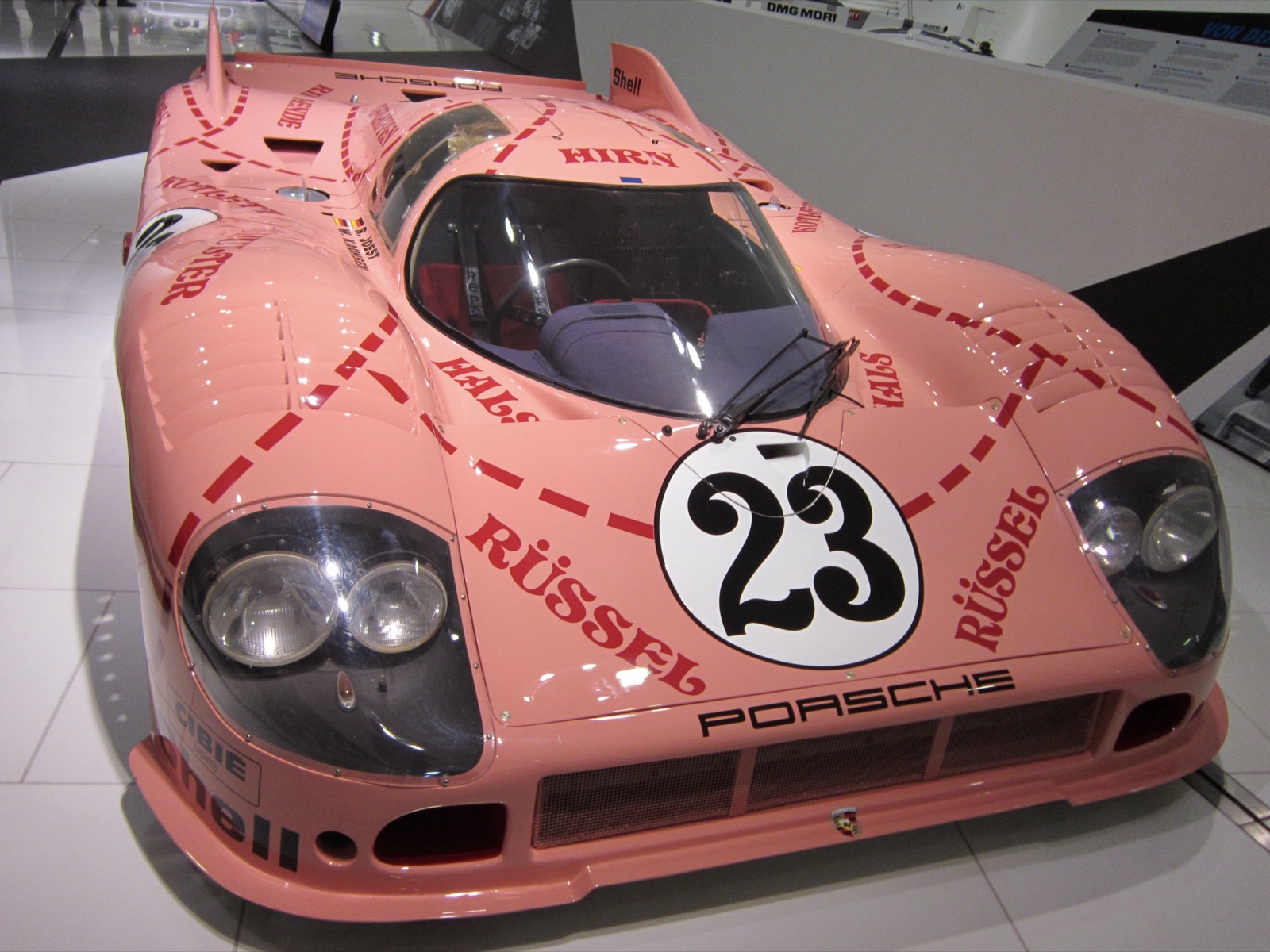
The 917/20 was a one-off aerodynamic experiment — short, wide, and unusually rotund compared to its sleek 917 siblings. Porsche engineers nicknamed it “Der Trüffeljäger von Zuffenhausen” (the truffle hunter), and a designer ran with the pig theme: a pink paint job with German butcher’s labels — Filet, Kotelett, Rüssel — marking the cuts across the panels.
It raced only once, at the 1971 24 Hours of Le Mans, entered under the Martini banner and driven by Reinhold Joest and Willi Kauhsen. It ran as high as third before a brake failure at Arnage ended its day. One race, one retirement — and yet it became one of the most beloved cars Porsche has ever built. The factory revived the scheme on the 911 RSR at Le Mans in 2018, and it remains a guaranteed crowd-pleaser.
Lounge tip
The Pink Pig is the perfect icebreaker livery for birthday parties and corporate groups. It’s funny, it’s unmistakable, and it instantly lowers the intimidation factor for first-timers who think sim racing is too serious.
Salzburg red — the first overall Le Mans win
Plain white with a bold red front and a red stripe down the spine. The Porsche Salzburg 917K is the car that finally delivered what Porsche had chased for two decades.
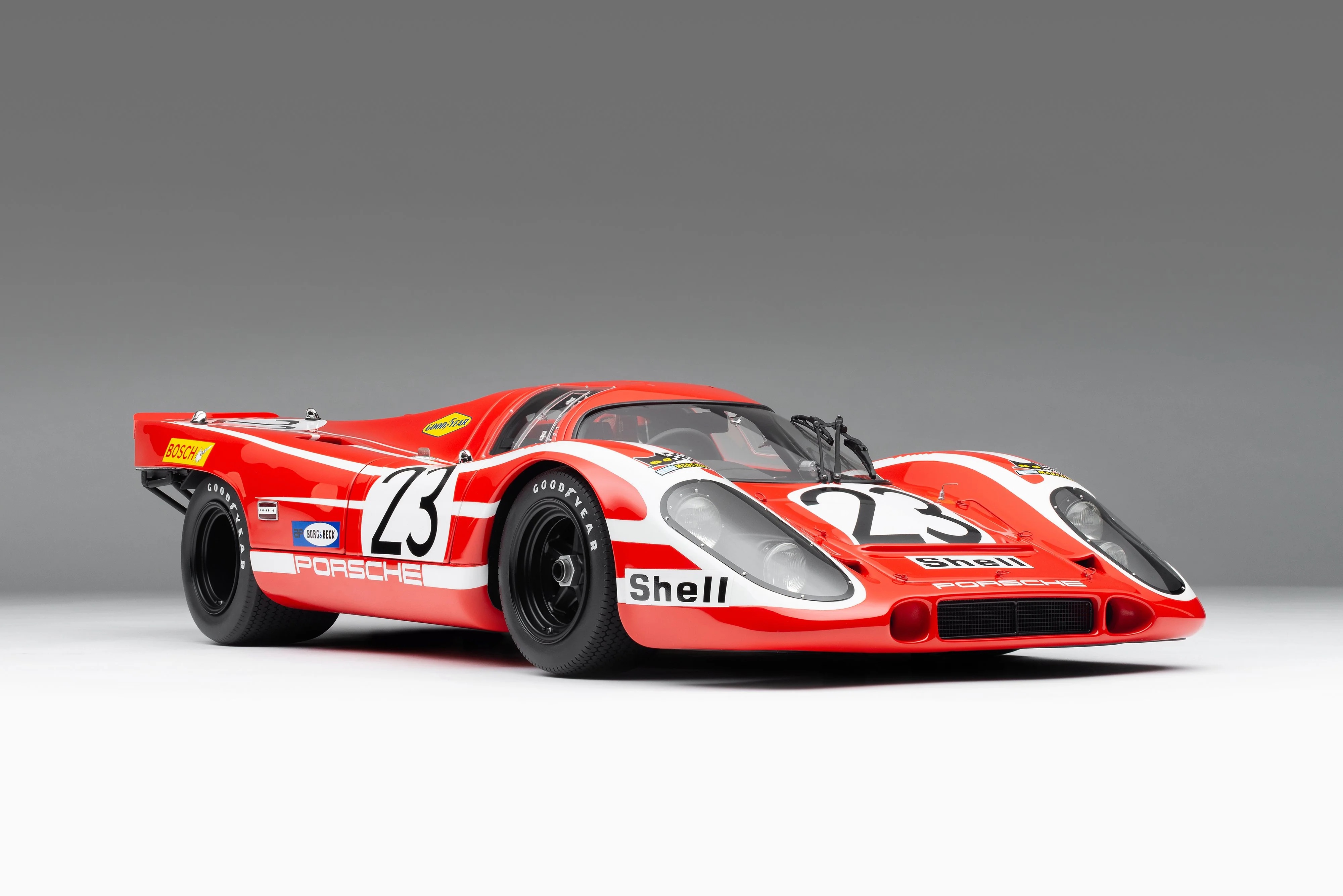
On a rain-soaked weekend in June 1970, the red-and-white 917K run by Porsche Konstruktionen Salzburg — entered by Louise Piëch’s operation and driven by Hans Herrmann and Richard Attwood — scored Porsche’s first-ever overall victory at the 24 Hours of Le Mans. It’s arguably the single most historically important livery in the company’s racing story.
The Salzburg scheme is understated next to the Gulf and Martini cars, but that simplicity is the point: it represents the breakthrough, the win that launched the legend. Porsche has paid tribute to it repeatedly, including on a heritage 911 RSR.
Rothmans — Group C royalty
Blue, white, and gold over a clean base. The Rothmans Porsche livery defined the most dominant period in the brand’s prototype history.
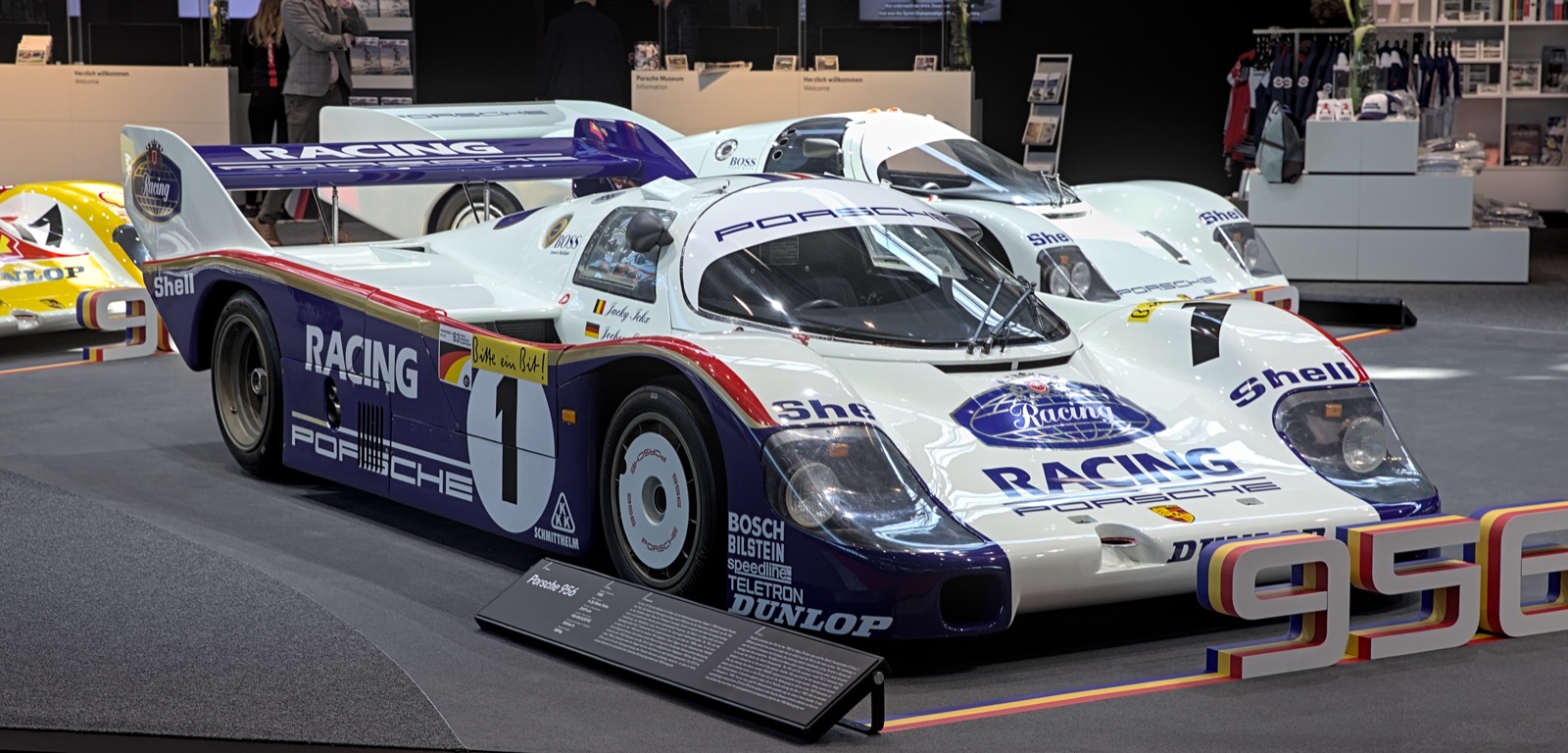
From 1982, the Rothmans colours adorned the 956 and 962 cars that crushed the World Sportscar Championship and Le Mans through the mid-1980s. The same scheme appeared on the 911-based 959 that conquered the brutal Paris-Dakar Rally in 1986, making Rothmans one of the rare liveries to win both at Le Mans and in the desert.
Because tobacco branding is no longer permitted on modern cars, faithful Rothmans recreations live almost entirely in the sim racing world now — which makes the downloadable skin packs the only way many fans will ever see the full design on a 962.
The American liveries: Brumos, Coca-Cola, Apple
Porsche’s North American campaigns produced a distinct family of liveries — louder, more commercial, and tied to IMSA and Daytona glory.
Red / White / Blue
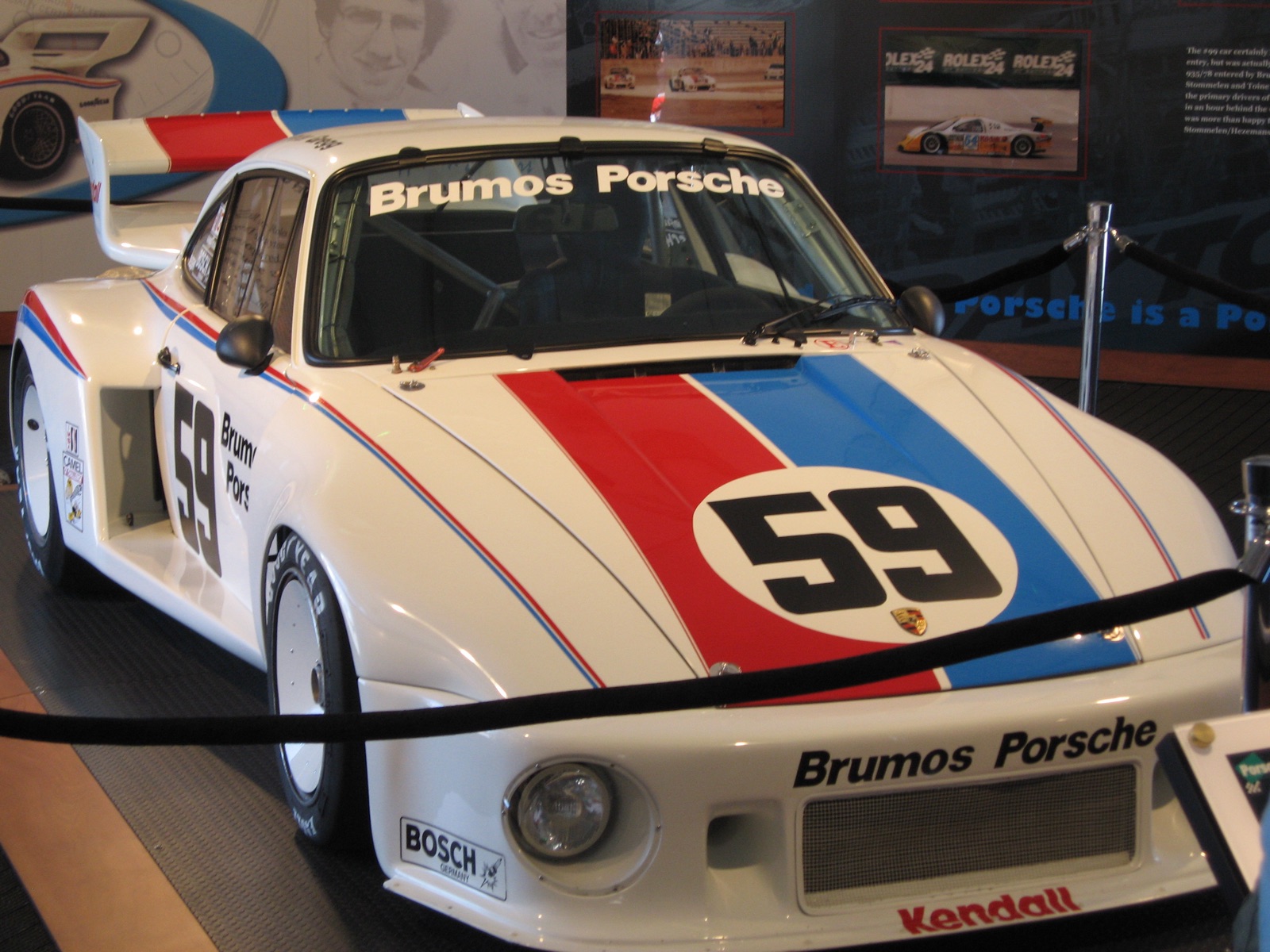
Brumos
The legendary Jacksonville Porsche dealership and race team of Peter Gregg and Hurley Haywood. The white car with red and blue stripes and the famous #59 won the Rolex 24 at Daytona and dominated IMSA in the 911 RSR and 935. A cornerstone of American Porsche culture.
Red / White
Coca-Cola
Bob Akin Motor Racing ran the striking Coca-Cola red-and-white 935 and later 962 in IMSA through the 1980s. Bold, commercial, and unmistakably American — a favourite for fans who like their liveries vivid.
Rainbow spectrum
Apple Computer
In 1980, Apple Computer sponsored a Porsche 935 K3 run by Dick Barbour Racing (#71, with a young Bobby Rahal driving), carrying Apple’s classic rainbow-spectrum logo. Porsche Penske Motorsport revived the scheme on the 963 at Laguna Seca in May 2026 to mark Apple’s 50th and Porsche Motorsport’s 75th anniversaries.
The Apple revival is a perfect example of why these schemes endure: a 46-year-old sponsorship became headline news again the moment it reappeared on a modern Le Mans Hypercar. Heritage liveries generate attention precisely because they connect the present to a story fans already love.
New Man & Mobil 1 — the modern classics
Two more schemes that earn a place on any serious list — one a Group C icon, the other the face of Porsche’s last great GT triumph.
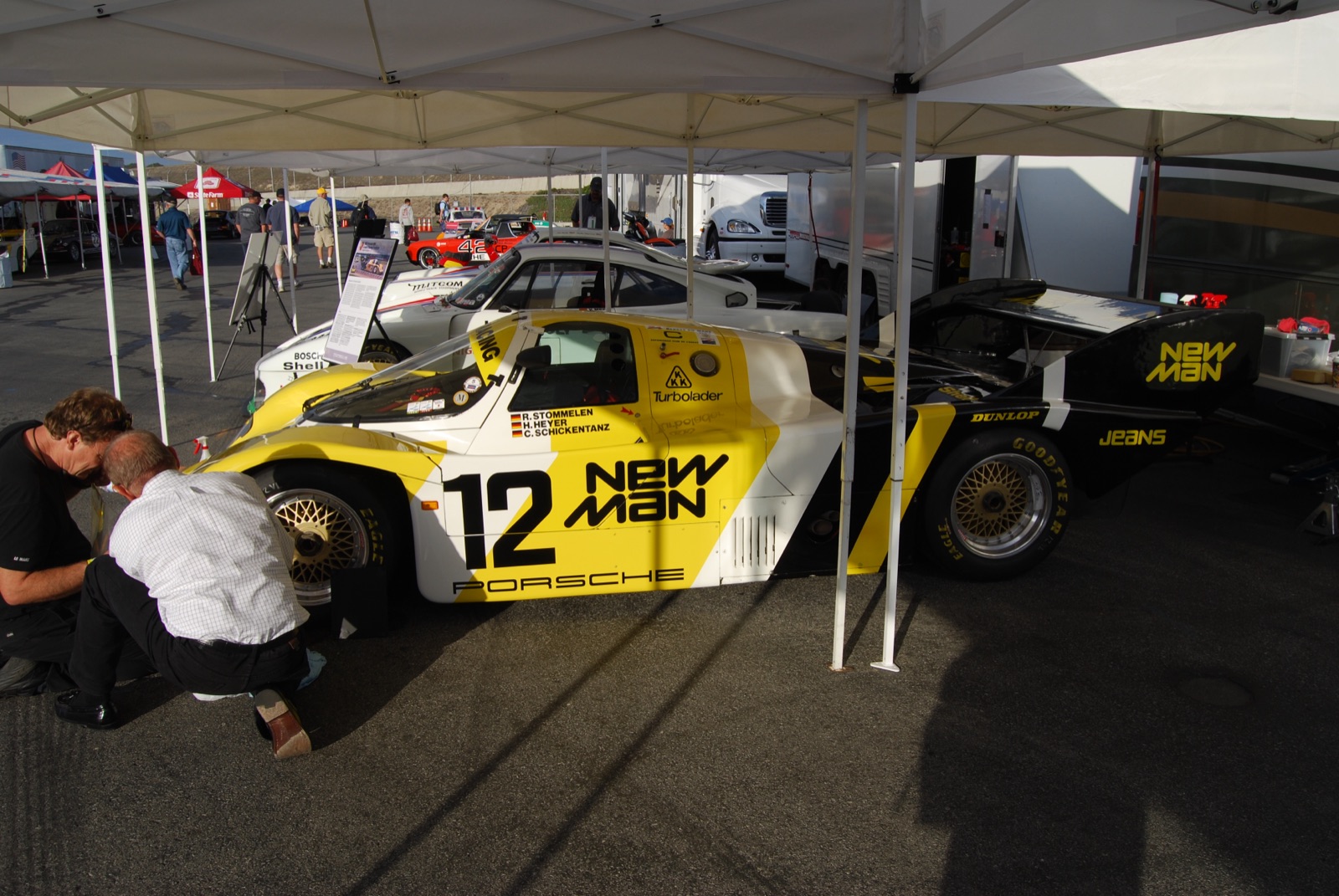
New Man (Joest 956)
The colourful New Man / Kangol scheme on Joest Racing’s 956 is regularly praised as one of the best-looking Group C designs ever. It won the 24 Hours of Le Mans back-to-back in 1984 and 1985 — a privateer beating the factory, in a livery that looked the part.
Mobil 1 (911 GT1-98)
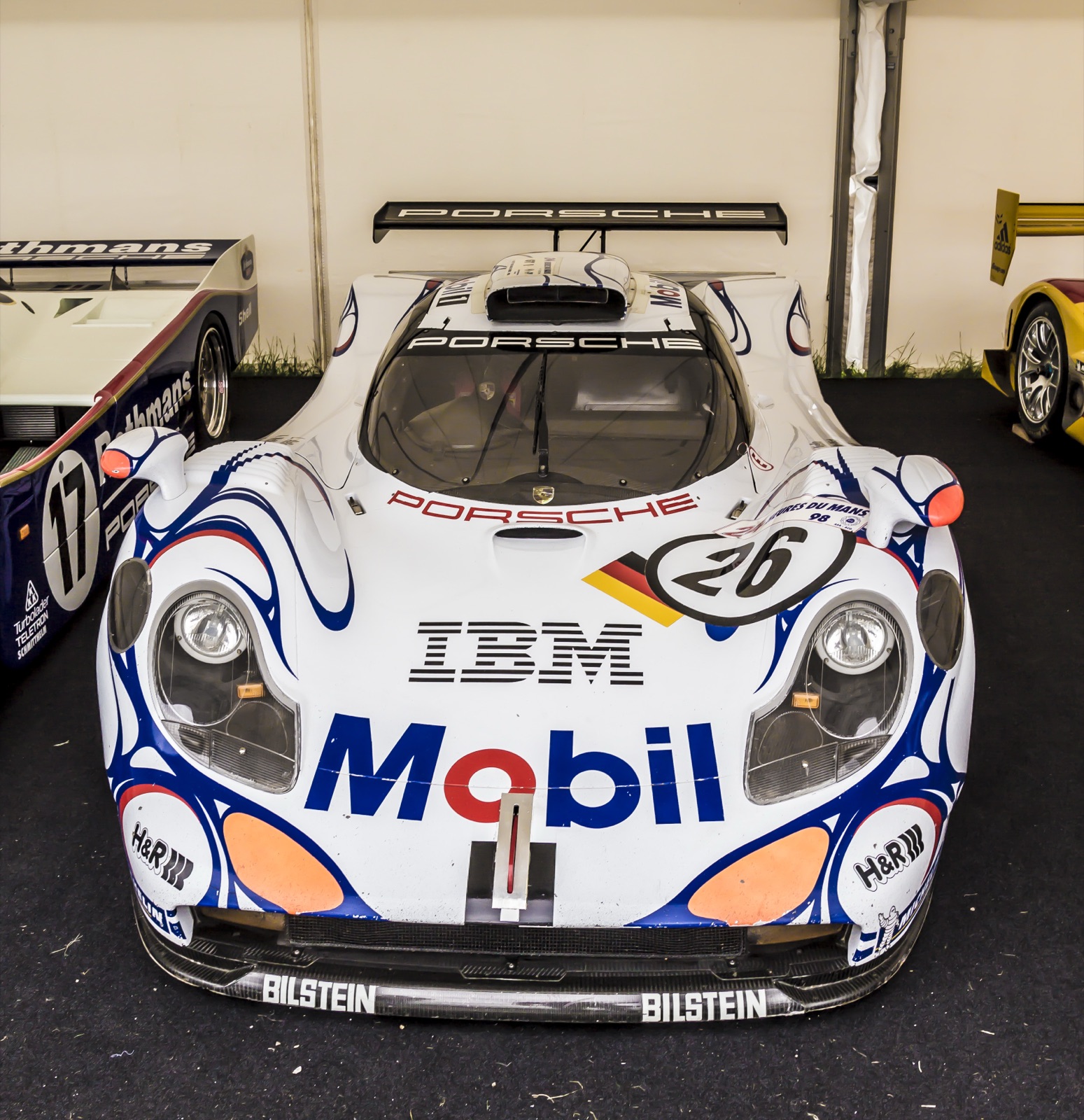
The white-and-blue Mobil 1 livery on the 911 GT1-98 carried Porsche to overall victory at Le Mans in 1998 — the marque’s 16th win and its last top-class triumph for two decades. A clean, corporate, instantly dateable late-90s classic.
Running these liveries in your sim
Every livery on this list is achievable in a modern sim, either out of the box or through the community skin ecosystem. For a lounge, curating a few “greatest hits” presets is a small touch that makes a big impression.
Where the skins come from
Titles like Assetto Corsa, ACC, and rFactor 2 have enormous community libraries. Sites such as OverTake (the former RaceDepartment) host thousands of historically accurate Porsche skins — including curated packs tied to events like the Porsche Rennsport Reunion. A staff member can build a folder of vetted liveries in an afternoon, giving customers a one-click menu of legends to choose from.
How to use them in the customer experience
| Customer moment | Suggested livery | Why it works |
|---|---|---|
| First-timer / birthday party | Pink Pig | Funny and disarming — kills the intimidation factor instantly |
| Photo / social-media moment | Gulf 917 | The most recognizable, most photogenic scheme in racing |
| Endurance / league night | Rothmans 962 or Martini 956 | Period-correct Group C atmosphere for serious racers |
| Corporate event in the US | Brumos or Apple 963 | Familiar American brands spark conversation and selfies |
| Heritage theme night | Salzburg 917K | A talking point — "the car that won Porsche’s first Le Mans" |
Operations note
A small “Choose your legend” livery menu at check-in is a zero-cost upsell to the experience. GTLane tracks which sessions and cars drive the most repeat bookings, so you can see which heritage themes actually bring customers back — and build event nights around the ones that do.
Liveries are the cultural on-ramp to sim racing. A customer who can’t yet hit an apex still knows exactly which car looks the coolest — and giving them the Gulf 917 or the Pink Pig for their first lap turns a session into a story they’ll tell their friends. That story is what fills bays next weekend.